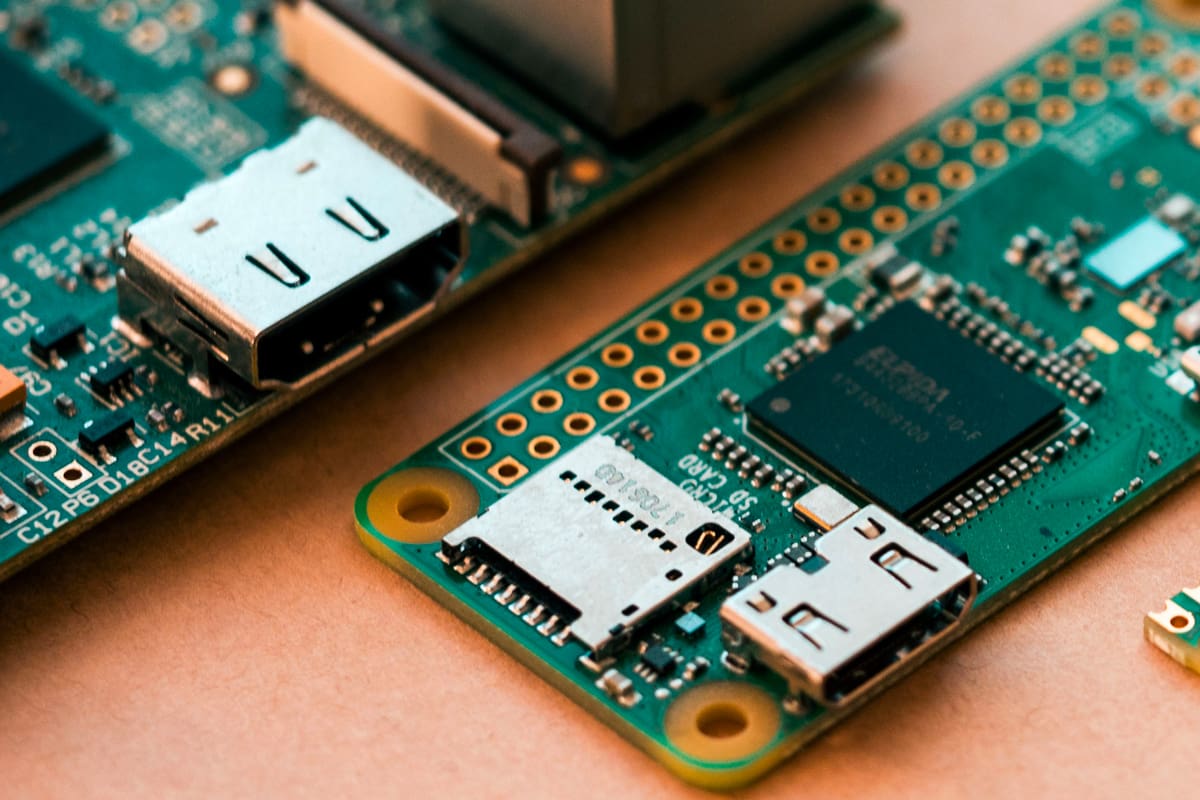
Amotus designs production-ready electronics — schematic, PCB layout, signal integrity, power, and RF — engineered to IPC standards and optimized for cost, manufacturability (DFM), and certification (FCC, ISED, CE). We take a board from concept through prototype to a clean manufacturing handoff, with second-source BOM strategy built in. Bilingual engineering team headquartered in Quebec City.
- 13+ years & 800+ projects in electronics design
- IPC-2221 / IPC-A-610 / IPC-6012 design & quality standards
- FCC · ISED · CE certification-ready layout
- EN / FR Quebec-based team
Book a FREE 30-min qualification call — response within 48 h →
When you need an electronics design partner
You have a product idea or a prototype to engineer
You need a manufacturable board, not a breadboard — schematic, layout, BOM, and a path to certification and production. We engineer it to IPC standards and design for manufacturing from the first schematic.
You need a board redesigned for cost, size, or supply
An existing design is too expensive, too big, or stuck on an unobtainable part. We redesign for cost (BOM optimization, second-sourcing), for size (denser layout, integration), or to escape a supply-chain dead end.
You need a specialized board: RF, high-power, or high-speed
RF and antenna design, high-power and power-electronics interfaces, or high-speed digital with signal-integrity constraints — the boards where layout discipline makes or breaks the product.
Standards & practices we design to
| Standard / practice | Scope |
|---|---|
| IPC-2221 | Generic PCB design standard |
| IPC-6012 | Qualification & performance of rigid PCBs |
| IPC-A-610 | Acceptability of electronic assemblies |
| IPC-2581 / ODB++ | Manufacturing data exchange |
| DFM / DFA / DFT | Design for manufacturing, assembly & test |
| FCC / ISED / CE (RED) | EMC & radio certification readiness |
| IEC 62368-1 / UL | Product safety (via accredited labs) |
| RoHS / REACH | Materials compliance |
Transparency note: certification and assembly-quality conformance are issued by accredited labs and your manufacturer, not by Amotus. We design to these standards, run pre-compliance, and prepare the documentation so the formal steps pass cleanly. We design to IPC practices; we don't claim a corporate certificate to them.
Our electronics design services
Schematic design & architecture
Architecture, component selection (with availability and second-source in mind), and schematic capture with design reviews at each milestone.
Deliverables: architecture document, schematics, component selection & second-source analysis, design-review records.
PCB layout & signal integrity
Multi-layer layout with controlled impedance, signal-integrity and power-integrity analysis, EMC-aware routing, and thermal management.
Deliverables: layout, stackup, SI/PI analysis, EMC pre-compliance plan, fabrication & assembly data.
RF & antenna design
RF front-ends, antenna selection and tuning, matching networks, and pre-scan testing toward FCC/ISED/CE — with a modular vs. full certification strategy.
Deliverables: RF design, antenna tuning report, pre-scan results, certification plan.
Power electronics & battery
Power supplies, battery charging and management, power-path design, and efficiency/thermal optimization for everything from coin-cell sensors to high-power systems.
Deliverables: power architecture, schematics, efficiency & thermal analysis, battery-life or power budget.
DFM/DFA & manufacturing handoff
Design-for-manufacturing and assembly reviews, test strategy (DFT), EMS partner selection, and a complete, clean handoff package.
Deliverables: DFM/DFA report, test plan/fixtures, manufacturing package, EMS introduction.
Prototyping & bring-up
Prototype builds, board bring-up, and validation against requirements before committing to production.
Deliverables: prototype, bring-up report, validation results, design revisions.
Our hardware methodology
- Requirements & feasibility — architecture, component & supply strategy, cost target, certification path
- Schematic & review — capture, component selection, design review
- Layout & analysis — PCB layout, SI/PI, EMC pre-compliance, thermal
- Prototype & bring-up — build, validate, iterate
- DFM & pre-compliance — manufacturability, test, EMC/RF pre-scans
- Production transfer — manufacturing package, EMS handoff, pilot run
Project example — connected product electronics
Project: production-ready electronics for a connected device — schematic, multi-layer layout, RF, and power — engineered for cost and certification, the kind of board behind Amotus's hardware-to-cloud projects.
What we engineered:
- Cost-optimized multi-layer PCB with a wireless SoC and controlled-impedance routing
- Power management for battery life and thermal performance
- RF layout and antenna tuning for FCC/ISED/CE pre-compliance
- DFM review and a clean manufacturing handoff package
Tools & tech: Altium Designer · KiCad · SI/PI analysis · IPC-class layout · pre-compliance EMC
Most of our clients operate under confidentiality agreements, so project details on this site are kept at the technical level. We can discuss relevant, reference-checkable experience under NDA during a qualification call.
Typical hardware tech stack at Amotus
| Area | Tools & technologies |
|---|---|
| EDA tools | Altium Designer · KiCad · (client toolchains on request) |
| Analysis | Signal integrity · power integrity · thermal · EMC pre-compliance |
| MCU / SoC | STM32 · NXP i.MX · Nordic nRF52/nRF53 · ESP32 · Silicon Labs |
| Wireless | BLE · Wi-Fi · LoRaWAN · Cellular (LTE-M) · Matter/Thread |
| Manufacturing | DFM/DFA/DFT · IPC-2581/ODB++ · vetted EMS partners (NA & Asia) |
| Compliance | FCC · ISED · CE/RED · IEC 62368-1 · RoHS/REACH (via accredited labs) |
Frequently asked questions — electronics design
How do you handle data security?
Security is a first-class design requirement, not an afterthought. We work to SOC 2 Type II–audited practices (Groupe Vectanor), with zero-trust architecture, mTLS between devices and cloud, encryption in transit and at rest, and data residency in the region you require on our multi-region Fundamentum platform (Canada, US, Europe, and more). Your data stays yours, with clear ownership and open export.
Altium or KiCad — which do you use?
Both. Altium Designer is our workhorse for complex, multi-layer, high-speed designs and team collaboration. KiCad is excellent for many projects and when a client wants a fully open toolchain with no license dependency. We can also work in your toolchain. The right choice depends on complexity, your team, and IP/handoff preferences.
How do you protect against component shortages?
Second-sourcing is designed in: we select parts with multiple suppliers where possible, document alternates in the BOM, avoid single-source traps, and flag long-lead items early. For redesigns triggered by an obsolete part, we re-architect around available components rather than chasing grey-market stock.
Can you get my board through FCC/CE certification?
We design for it and manage the campaign with accredited labs — RF layout discipline, pre-scans, and the documentation the lab needs. The certificate is issued by the lab/body, but our goal is first-pass success. Using a pre-certified wireless module can also cut testing cost and time.
Do you handle manufacturing too?
We design for manufacturing and hand off cleanly to an EMS, and we can introduce vetted assembly partners in North America and Asia and support the production ramp. We're a design house — you own the design and choose your manufacturer; we're not locking you into ours.
What's the difference between DFM, DFA, and DFT?
DFM (manufacturing) ensures the board can be fabricated reliably and economically; DFA (assembly) ensures components can be placed and soldered without yield problems; DFT (test) ensures you can actually test the board in production. We apply all three before release, which is what keeps the production ramp from surprising you.
How much does a board design cost?
It depends on complexity: the wireless interfaces, power management and sensors on the board, and whether it has RF, high-power, or high-speed constraints, which are scoped higher. Certification and tooling are separate. Your quote depends on complexity.
Who owns the design?
You do. As a design house, we deliver the full design package and the IP belongs to you — no lock-in to us or a specific manufacturer.
Why Amotus for your electronics design
- Full-stack hardware-to-cloud — the board is designed knowing the firmware, OS, and cloud it has to serve
- Production-minded — DFM/DFA/DFT and second-source strategy from the first schematic
- Certification-aware — FCC/ISED/CE designed in, with accredited-lab partners
- You own the IP — design-house model, clean handoff, no lock-in
- Bilingual EN / FR — Quebec-based team, partnerships including Variscite and major MCU vendors
Book a FREE 30-min qualification call — response within 48 h →